
Commitment to the environment, aiming for production
A product of fully organic process, with Japanese technology, that nourishes the plant and cares for the land.
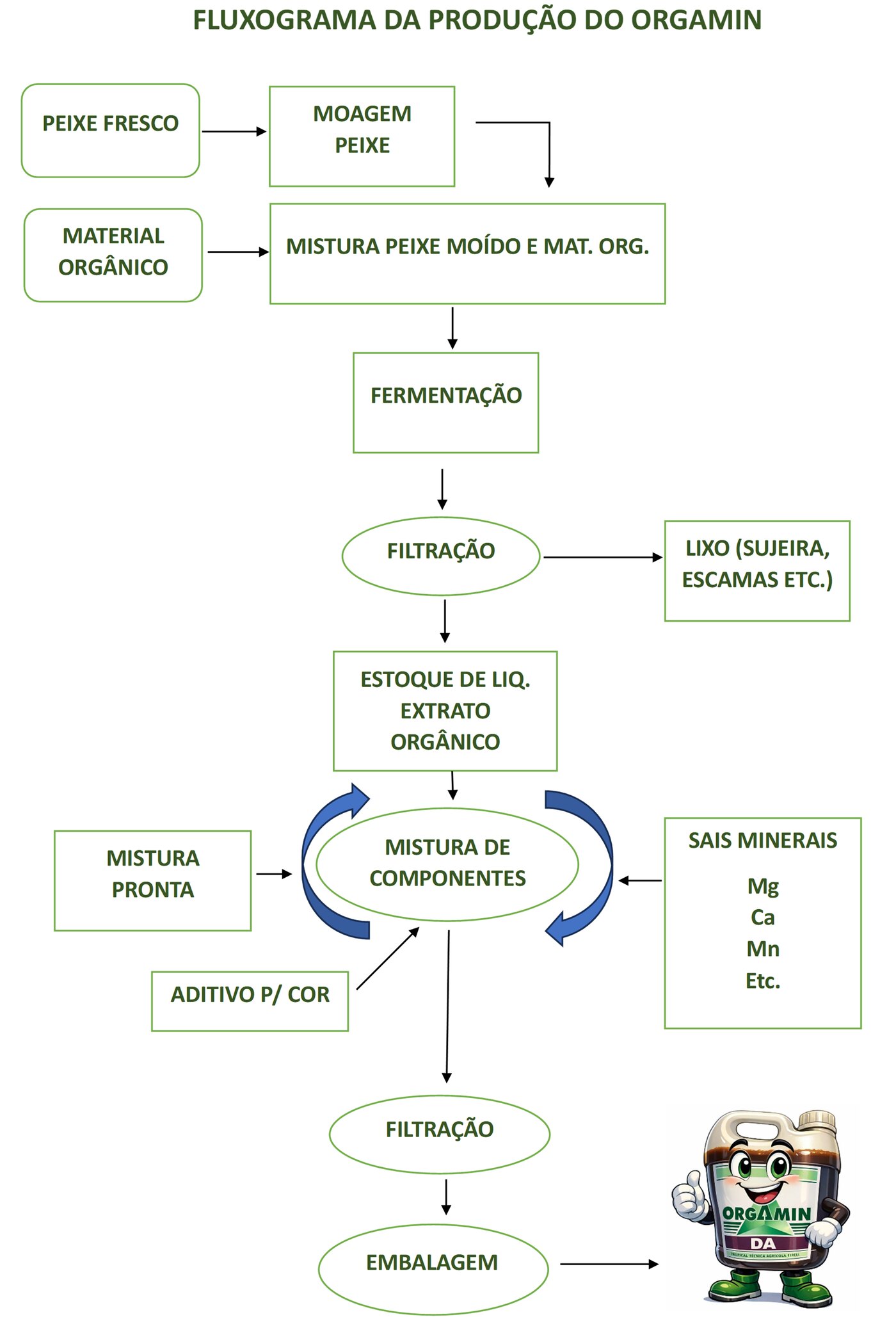
How is Orgamin produced?
Plants often lack the micronutrients that support the growth of roots, leaves, flowers and fruit. Orgamin is a mixed mineral foliar fertilizer, reinforced with vitamins, carbohydrates, amino acids and nucleic acids. This formula is only possible through a Japanese fermentation recipe, using fish meat and sugarcane molasses as its base. The process is fully organic and the technology employed gives the compound long shelf life, retaining its nutrients even after years.
+ mineral salts (Mg, Ca, Mn…) and color additive at the mixing stage. Byproducts (scales, dirt) are separated during filtration.
How does Orgamin work?
Results can be observed within 10 days of use on some crops. Diluted in water and sprayed, the droplets stay on the leaves and are absorbed gradually; the rest that runs off is absorbed by the stem or root in the soil, contributing to total nutrition. Made with cutting-edge technology, it poses no health risk or poisoning hazard, and can be mixed with other products without high alkalinity or mineral oil — optimizing time, water and cost.
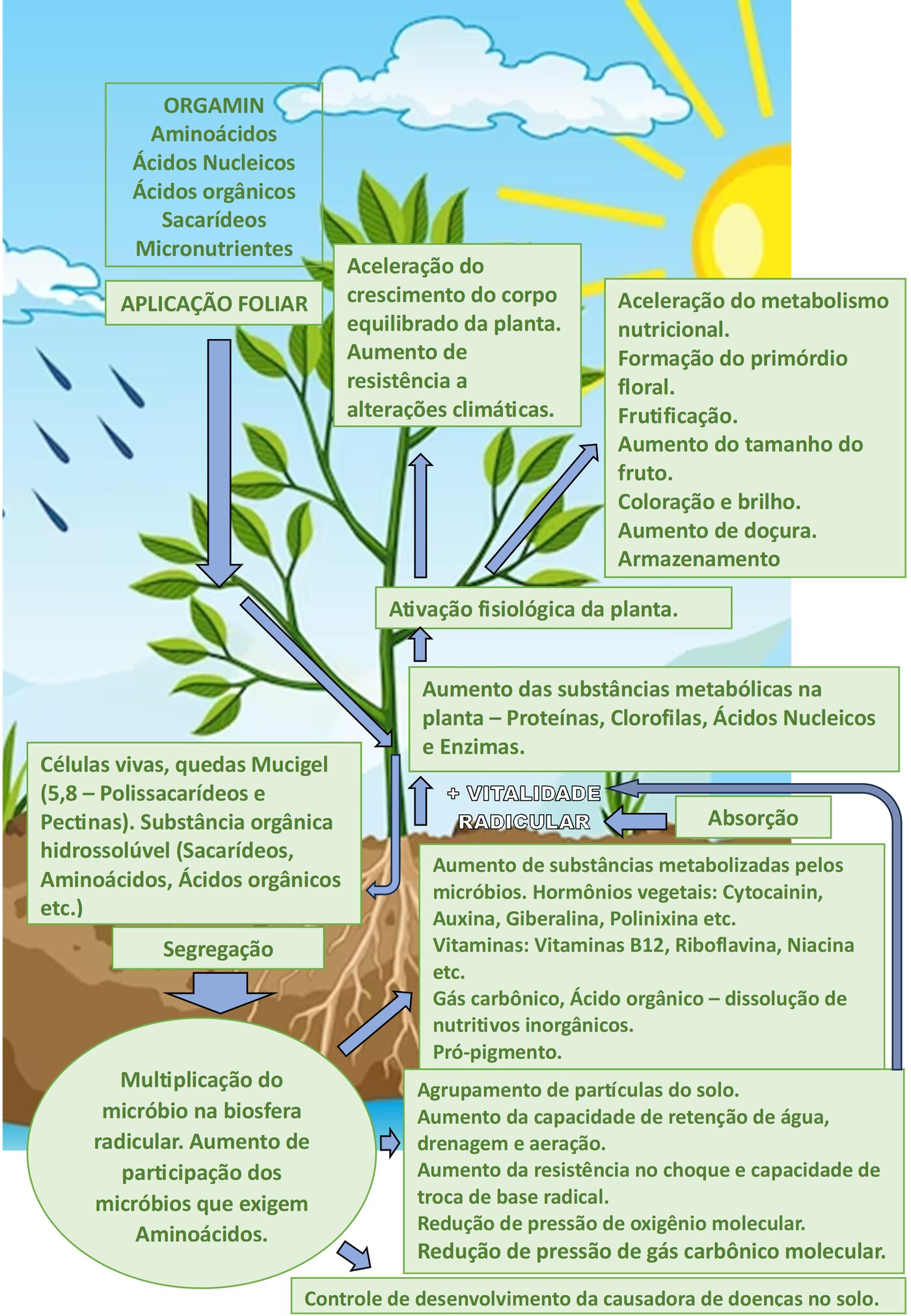
Accelerated growth
Speeds up growth and resistance to climate changes.
Nutritional metabolism
Favors flowering, fruiting, size, color, shine and sweetness of the fruit.
Root vitality
More absorption, plant hormones and vitamins; multiplies microbes in the root biosphere.
Soil health
Aggregates particles, retains water, improves drainage and aeration and controls soil pathogens.